


Puntos de Interés

Culture
Alvar Ruiz Tower
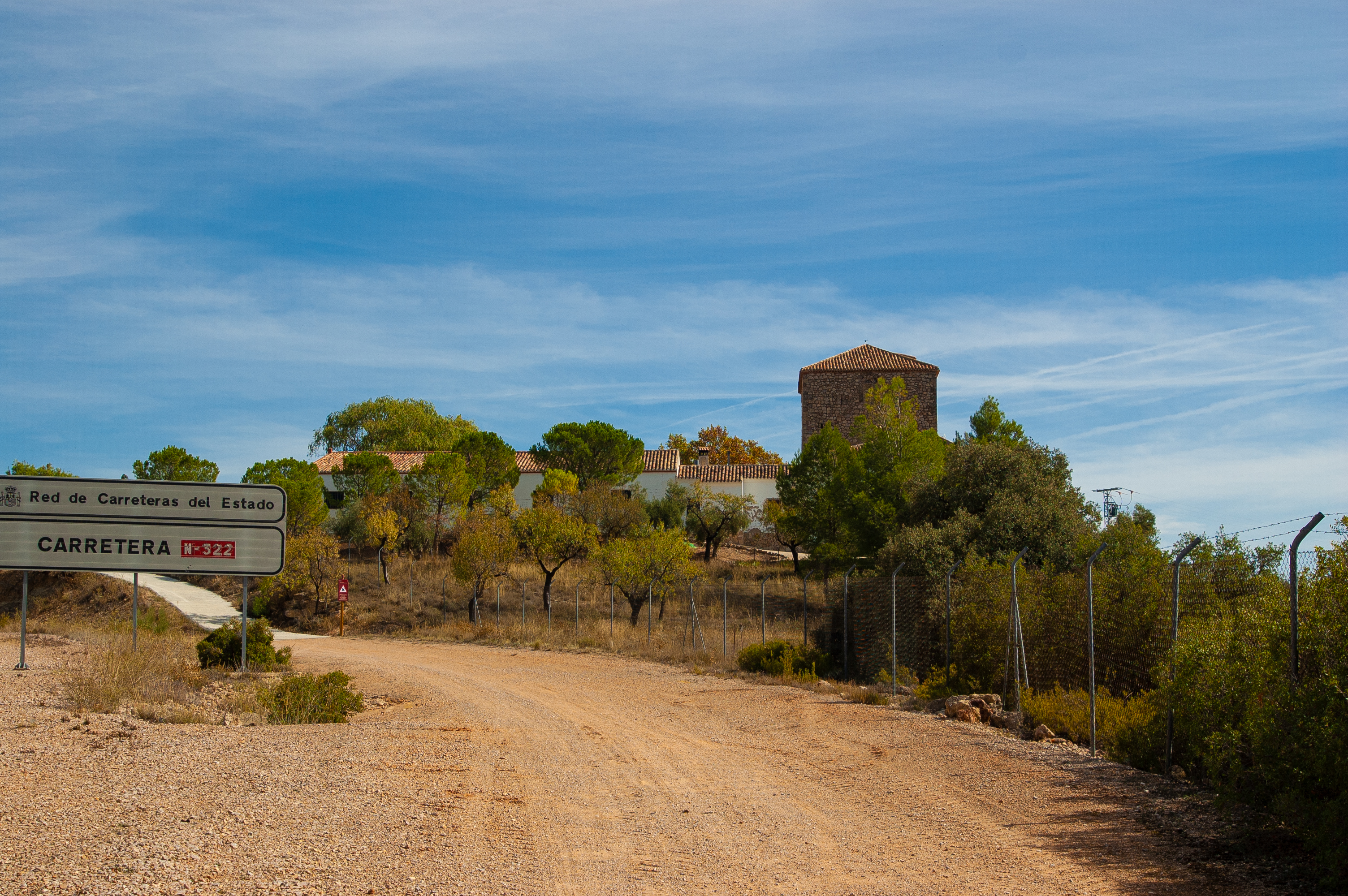
Álvar Ruiz Tower stands next to the N-322 road, very close to Balazote (Albacete), as one of the most representative heritage elements in the area surrounding the El Jardín River. Although located within private grounds and not open for visitors, its silhouette stands out among almond and pine groves, visible from the road, evoking the ancient defensive towers that protected the fields and roads of the eastern La Mancha region.
With a square floor plan and a side measuring about ten metres, the tower has three storeys built with masonry walls and reinforced with ashlars at the corners. The arrow slits that can still be seen in its walls are a reminder of its original function as a watchtower and refuge, designed to control the paths and farmland in the valley. The upper part must have had a parapet or defensive terrace, later replaced by the current hipped roof.
Its name refers to Álvar Ruiz, a knight of local lineage linked to the territory during the late Middle Ages. Although there is no direct documentation regarding its foundation, studies estimate that the tower was erected between the late 15th century and early 16th century, coinciding with the process of consolidation of noble properties after the Reconquest. Later, in 1558, Francisco Guerrero y Villena, lord of these lands, instituted the entailed estate of the Tower of Álvar Ruiz, becoming a symbol of power and a centre of agricultural management and guaranteeing its hereditary transmission within the Marquisate of Valdeguerrero.
Over time it lost its military character and was adapted to residential and rural uses. Today it is part of a group of restored traditional buildings, privately owned and not open to tourism or visitors, although its conservation remains an important contribution to the rural and historical heritage of Balazote.
The Tower of Álvar Ruiz thus becomes part of the network of minor defensive constructions that once marked out the territory of La Mancha, recalling the strategic and social importance of these fortifications, today transformed into silent witnesses to the history and identity of the Albacete landscape.