

Puntos de Interés

Municipality
Girona
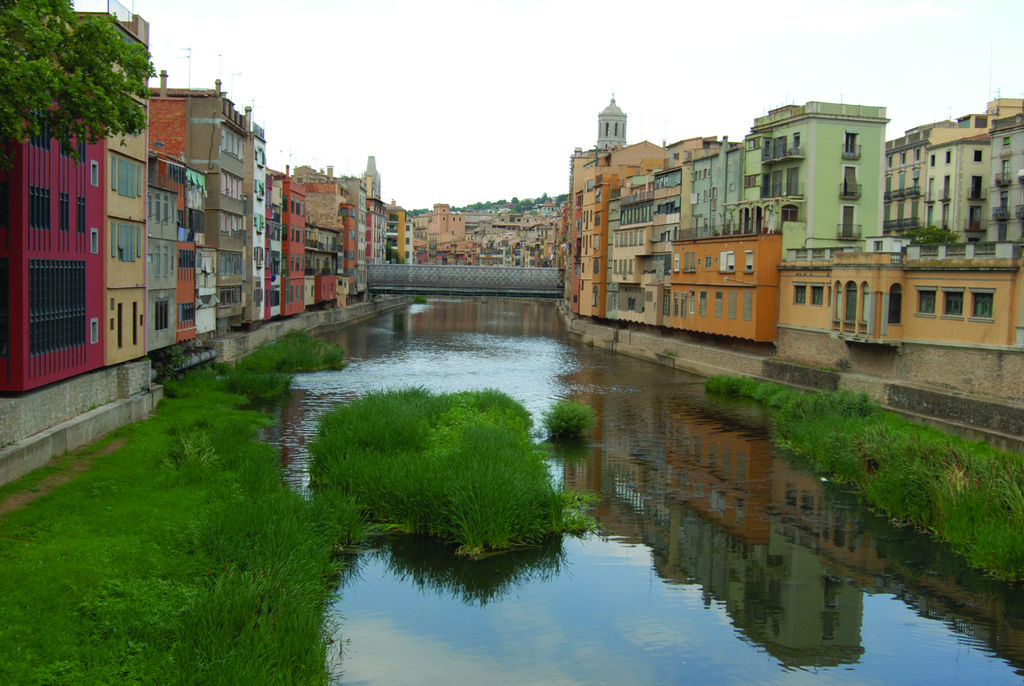
Nestled in the Ter valley, we find the city of Girona. Known as the city of four rivers - it is located at the confluence of the rivers Onyar, Ter, Güell and Galligants - it is the largest city and capital of the province of Girona.
Due to its strategic position, located at the narrowest point of the route that crosses the Pyrenees, the last bridge to Africa, and the first boulevard of Europe, it has been inhabited since the earliest stages of the Palaeolithic period. Later, the Romans arrived and founded a citadel named Gerunda close to the Via Augusta. When the Christians arrived and the Roman Empire fell in 476, Girona fell under the rule of the Visigoths until 711. Charlemagne founded the county of Girona in 785. Girona, had been the episcopal see and the capital of the diocese since the 5th century, allowed the Jews, who settled near the cathedral, to live in the city, until they were expelled from the Iberian Peninsula in 1492.
The town has been the scene of several wars from the 17th century until 1833, such as the Reapers’ War. The continuous conflicts between Spain and France caused Girona to be besieged on numerous occasions, which would be repeated during the Napoleonic wars.
From 1833 until the beginning of the 20th century, Girona underwent its own revolution. It was chosen as the provincial capital, industry arrived and the so-called Universidad Libre (Free University) of Girona was founded in 1869, which together with the cultural explosion of the city led to dramatic population growth.
Girona’s noteworthy architectural, historical and cultural heritage is found in the old town, with many medieval structures and some Roman, Arab and even Hebrew elements. Within the walled enclosure of Força Vella there are numerous treasures such as the Cathedral of Santa Maria, Barri Vell (Old town), the Casas del Oñar, the Call Jueu (Jewish quarter), the Arab baths, the Rambla de la Libertad, the Plaza de la Independencia, the bridges over the river Oñar, the old hospital of Santa Catalina, the post office building and the flour mill Teixidor.
As for its economy, in spite of the industrial expansion, traditional businesses remain an important economic engine. Of note is that Girona holds the record for the highest rate of stores per person in Spain. Girona also hosts numerous fairs and markets and has spectacular scenery such as the Costa Brava and the Pyrenees, which attract many tourists to the region.
As regards local festivities, the festivities in honour of Sant Jaume and St Narcis on July 25th and October 29th, respectively are celebrated with parades, speeches, mass, concerts and barraques (stalls) where drinks are served by the local bars. The neighbourhoods that make up Girona also celebrate different festivities with events organised by local associations.