

Puntos de Interés

Orography
Port de Vielha
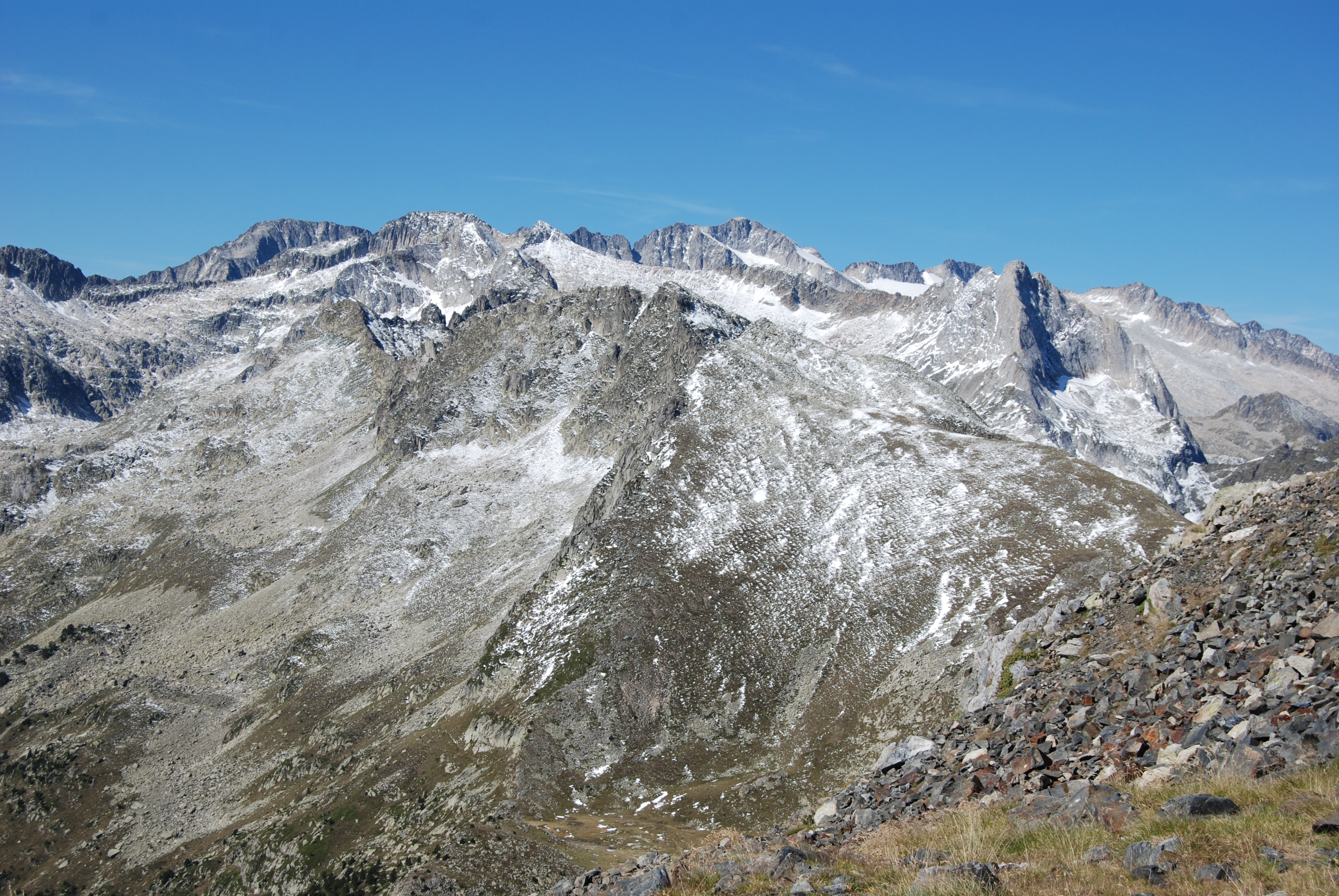
Port de Vielha is one of the most iconic mountain passes in the central Pyrenees and has played a vital role for centuries in connecting the Val d’Aran with the southern slopes. Situated at an altitude of over 2,400 metres, this natural mountain pass crosses the Pyrenean watershed in a high-mountain landscape dominated by rugged terrain, vast cirque glaciers and peaks that frequently exceed 2,500 metres.
From a topographical point of view, it is situated in an area characterised by steep slopes, rocky ridges and deep valleys shaped by the action of ice during the Quaternary glaciations. These glacial processes left very visible traces on the landscape today, such as U-shaped valleys, moraine deposits and broad basins that have now turned alpine meadows or small mountain lakes. The surrounding landscape is dominated by mountain ranges that form part of the central axis of the Pyrenees, one of the geologically oldest and most complex sections of the mountain range.
Geologically, the area is characterized metamorphic and granitic rocks, the result of the intense tectonic processes associated with the formation of the Pyrenees during the Alpine orogeny. These hard, erosion-resistant rocks create spectacular landscapes, featuring rocky outcrops, sharp ridges and steep slopes that contrast with the high-mountain pasture.
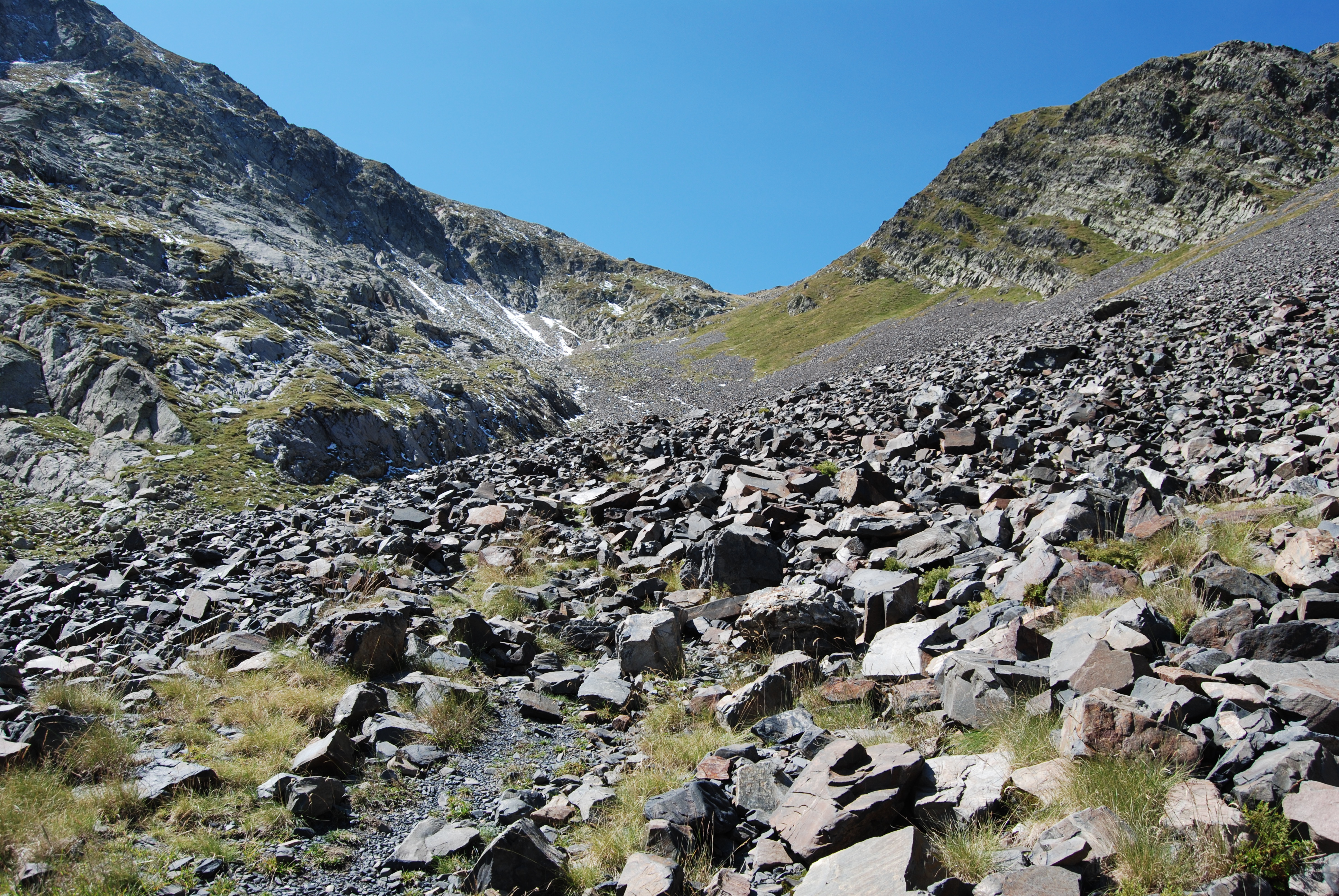
Historically, the Port de Vielha was one of the main natural passes between the Aran Valley and the Ribagorza region. For centuries, shepherds, traders and travellers used this pass to cross the mountain range, particularly during the summer months. However, the high altitude and harsh weather conditions made the pass a difficult and, at times, dangerous route.
The opening of the Vielha Tunnel in 1948 marked a turning point for transport links in the area, as it made it possible to cross the mountain range all year round without having to go over the pass. Nevertheless, the Port de Vielha retains great historical and scenic value as a former mountain route and as a prime vantage point over the Pyrenean landscape.