

Puntos de Interés

Hydrography
Narcea river
Stretching across approximately 110 kilometers, the Narcea River stands as the second-longest river in the Principality of Asturias, following the Nalón. Originating in the mountains of the Fuentes del Narcea, Degaña, and Ibias Natural Park, this watercourse runs through the municipalities of Cangas de Narcea, Tineo, Belmonte de Miranda, Salas, and Pravia before merging into the Nalón River, just a stone's throw from the sea. Its expansive basin, covering 1,135 km2, is nourished by key tributaries, including the river Naviego, the Coto, the Arganza, the Nonaya, and the longest among them, the Pigüeña.
Embarking from its source, the Narcea flows through a valley flanked by the Sierra de Pena Cuervo and the Sierra de Caniellas, creating narrow passes where numerous settlements were established. Subsequently, the river narrows as it courses between the Peña Ventana and El Pando mountain ranges, only to widen again upon reaching Cangas del Narcea, the main town along its journey. Progressing downstream, the Narcea encounters the La Florida reservoir, which retains its waters by a 19-meter-high dam inaugurated in 1952 for hydroelectric purposes, and generates 7.6 MW of energy. Further downstream, the river is impounded once more by the La Barca reservoir, built in 1966 with a 73.5-meter-high dam that flooded around 200 hectares. This reservoir's associated hydroelectric power station generates 56 MW and supplied water to the Narcea Thermal Power Station, which used coal from the region's mines. The river ultimately continues its course until converging with the village of Forcinas.
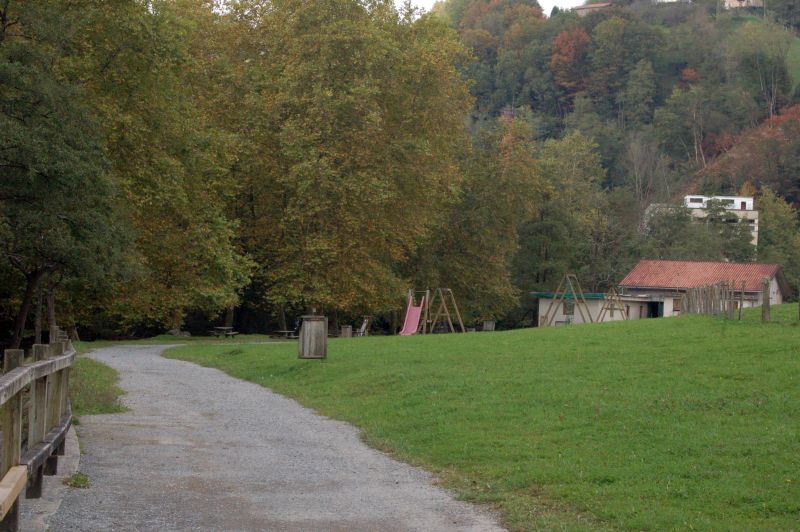
Renowned for its scenic beauty and rich biodiversity, the Narcea River traverses extensive forests of oak (Quercus robur), chestnut (Castanea sativa), and beech (Fagus sylvatica), presenting a mesmerising spectacle, particularly during the autumn months when leaves take on warm hues. Along its leafy banks, a diverse array of wildlife finds refuge, including the otter (Lutra lutra), the Iberian desman (Galemys pyrenaicus), the lamprey (Petromyzon marinus), and even the brown bear (Ursus arctos arctos).
However, the most iconic inhabitant of the Narcea is undoubtedly the Atlantic salmon (Salmo salar), coveted in numerous fishing preserves established by the Principality. Representing the largest fish in these waters, the Atlantic salmon is anadromous, spending most of its adult life in the sea before embarking on a journey of hundreds of kilometers upstream to spawn between October and November. This annual migration marks the closure of their life cycle.
The Narcea River holds significance as one of the Iberian Peninsula's strongholds for the Atlantic salmon, drawing both avid anglers and curious onlookers in pursuit of the prized "Campanu," the first specimen caught at the onset of the fishing season on the third Sunday of April. To preserve the habitat and sustain the livelihoods tied directly or indirectly to fishing, it remains crucial for the Narcea River and its tributaries to maintain a good state of conservation, ensuring the annual return of the Atlantic salmon.