

Puntos de Interés

Municipality
Carreña
Carreña, which is located at the confluence of the Ría stream and the Casaño River, is the capital of the Cabrera Council. The village is known for healing, Cabrales cheese, fishing, and the high mountain peaks.
Its history begins in the Palaeolithic caves of the region, and one of the most important caves is called La Covaciella. This spectacular prehistoric cave has been declared an Asset of Cultural Interest and a UNESCO World Heritage Site. It has a magnificent display of cave art that features detailed drawings of the fauna that lived in these areas, such as bison, horses, deer, or even a reindeer. These paintings date back 14,000 years. The drawings were well-preserved until they were discovered in 1994. However, the presence of too many visitors has caused deterioration and today, it is closed to the public. A replica of the cave can still be visited in the Casa de la Bárcena in the town of Carreña.
The Casa de la Bárcena is a complex that houses three exhibitions. It features the replica of the Covaciella Cave, as well as the Telecentre and the Enrique Herreros Museum. These exhibits celebrate popular affection for the mountains of Cabrales and the Picos de Europa. The Casa de la Bárcena dates back to the 17th-century and the house is adorned with the two coats of arms of the Bárcena Inguazo family. During the Civil War it was used as a barracks, and it was eventually renovated and turned into a cultural centre. It has a central balcony, a slit window on each side of the entrance door, and features elements that are typical of the popular mountain style, such as a porch for storing tools.
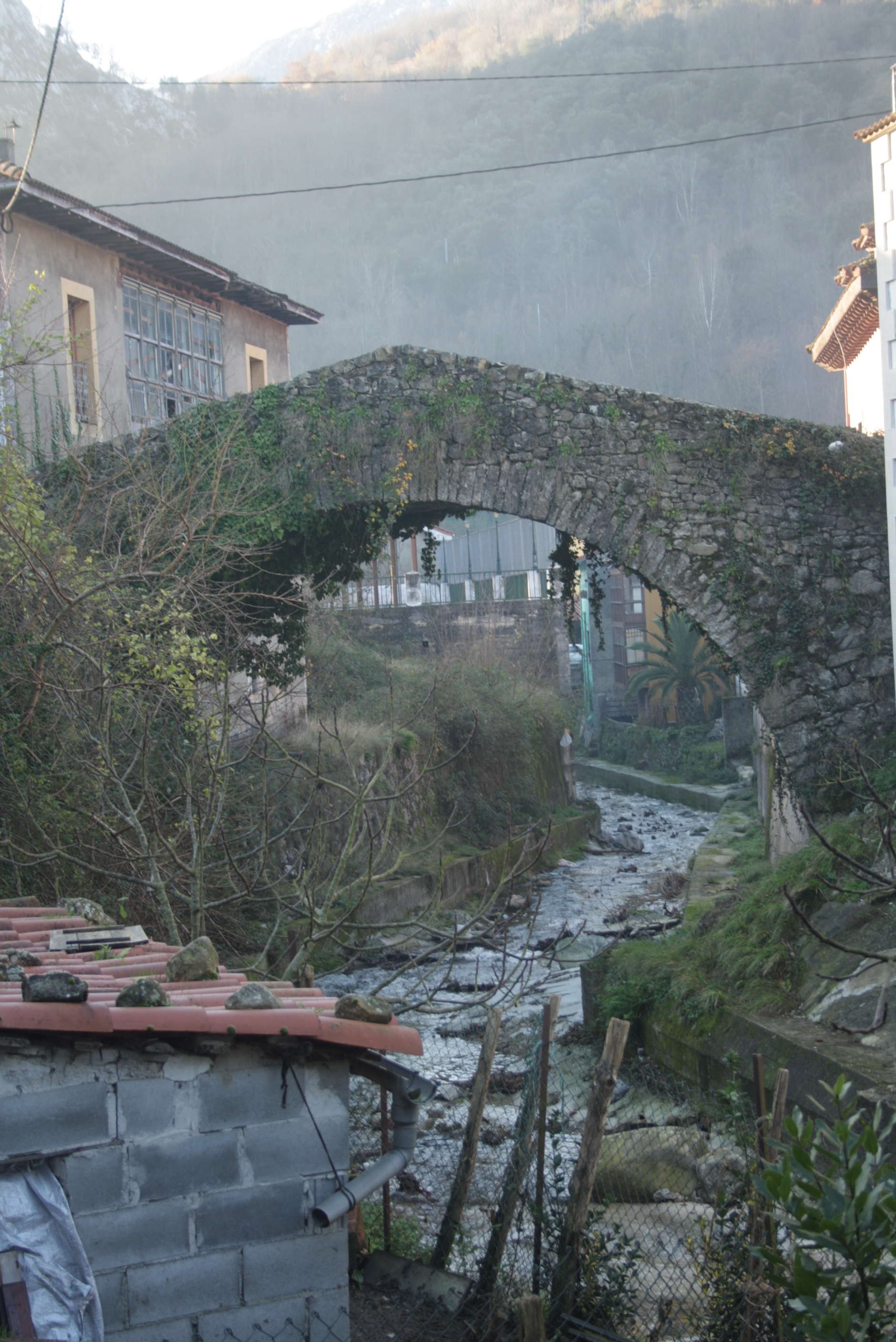
The Romans also left their mark on Carreña with the Roman road of Caoro. This road was one of the routes used by the Romans for travelling and for shipping out materials extracted from the mountains. The etymological origin of the name Carreña is believed to mean "cart path" (Xose Lluis García Arias), which would link it to this civil engineering work. After the Cantabrian Wars and their occupation of Asturias, the Romans began to exploit the minerals that they found here. The road allowed them to transport these valuable resources to Valdeón. Later, this road was used as part of the Royal Road. Near the old road we can find part of the area’s Late Middle Ages infrastructure. This is the Conceyu Bridge or Old Bridge. It was used to cross the Ría stream that runs through the town and flows into the River Casaño, which is a tributary of the Cuera River. This high bridge is supported by a single arch with well-preserved parapets.
Another construction that is part of Carreña's heritage is the Chapel of Our Lady of Good Health. This popular Baroque single-storey chapel was built in the 19th century, and is crowned by a ribbed vault. Its exterior features a single-eyed bell gable, and the porch has a round arch. It is adorned with characteristic elements of popular Baroque, and inside the church there is a mural art.
The most famous local legend is about this chapel. It is said that a man, whose surname was Bárcena and who was born in Carreña, travelled to Seville because he was blind and he wanted to pray to Our Lady of Good Health to ask her to heal him. In exchange he promised to bring her to his hometown. He was healed and so he pledged to bring an ivory figure of Our Lady from Seville to Carreña. Ever since, she has been venerated here.
The patron saint festivities in Carreña are held in honour of the revered Our Lady of Good Health every weekend after 8th September. The celebrations include a folklore festival where women wear traditional peasant costumes and men dress up in traditional attire. The festivities include the procession of Our Lady, making an offering of the bouquet, and dancing the local dance of the region of Cabrales, which is called corri-corri and has been designated as official heritage. People sing, and play the drums and the bagpipes. Bagpipes are such an essential part of the event that the Picos de Europa Bagpipe Festival is celebrated on the main day of the festivities.
It has to be mentioned of course that Carreña is one of the few places where Cabrales cheese is produced. It is made using a method that is unique to the Picos de Europa, although the result may vary due to the different conditions in the caves.
Around Carreña visitors can also explore the remnants of the area’s agricultural activity, the Llanu Molín. These winter cabins were used to protect livestock and peasants from the cold during the winter, and were also used for storage, for making cider, or for beekeeping.